
In 2012 the Summer Olympic Games were held for a third time in London, the city where New Zealand's Olympic story began in 1908. Kiwi athletes have produced plenty of memorable moments over the years, but the Games have also been marred by boycotts, controversy and tragedy.

Today's Olympics are a far cry from the London Games in 1908, when our first three Olympians competed as part of an ‘Australasian’ team. Harry Kerr from Taranaki won New Zealand’s first medal with a bronze in the 3500-m walk. Four years later, at Stockholm, New Zealand swimmer Malcolm Champion won gold as part of the Australasian 4 x 200-m relay team, while Anthony Wilding, who was to win four consecutive men’s singles titles at Wimbledon, claimed bronze in the tennis singles.
New Zealand has earned a reputation for punching above its weight at the Games. In 1984, at Los Angeles, New Zealand finished eighth on the medal table with 11, including a staggering eight golds. This was three more than Great Britain and − more importantly for many Kiwis − twice the tally of our former Olympic teammates, Australia.
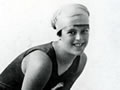
The first official New Zealand team in 1920 set the pattern. There were only four athletes in the team but each performed strongly. Darcy Hadfield kicked off New Zealand’s fine rowing tradition with bronze in the single sculls, while 15-year-old swimmer Violet Walrond, our first female Olympian, finished fifth in the 100-m freestyle final.
New Zealand’s first individual gold medal winner, Ted Morgan, literally punched above his weight when he triumphed at Amsterdam in 1928. A relative unknown before the Games, Morgan had to overcome a step up to the welterweight class (because he had put on weight during the long voyage from New Zealand) and a dislocated knuckle to claim gold.
Winter silver
In 1992 New Zealand’s Annelise Coberger became the first person from the Southern Hemisphere to win a medal at the Winter Olympics when she took silver in the slalom at Albertville in France. It was this country's only Winter Games medal until 2018, when Zoi Sadowski-Synott and Nico Porteous both won bronze medals at Pyeongchang, South Korea.
Only two competitors have represented New Zealand at both Summer and Winter Olympics: Madonna Harris (cross-country skiing and cycling) and Chris Nicholson (speed skating and cycling).
By 2021, when the COVID-delayed Tokyo Olympics were held, New Zealanders had won 143 Olympic medals − 54 gold, 33 silver and 56 bronze − including one silver and two bronzes at the Winter Games. Runners like Jack Lovelock, Peter Snell and John Walker have cemented their places not only New Zealand’s sporting history but in the Olympic story. Others achieved their own personal podium finishes simply by getting to the Games.
New Zealand women had won gold 16 times by 2021. Yvette Williams was the first, winning the long jump at Helsinki in 1952. It would be another 40 years before windsurfer Barbara Kendall followed suit at Barcelona. At Athens in 2004 cyclist Sarah Ulmer was victorious in the 3000-m individual pursuit. Rowing twins Georgina and Caroline Evers-Swindell won the double sculls at both Athens (2004) and Beijing (2008), while Valerie Vili claimed gold in the shot put at both Beijing (2008) and, as Valerie Adams, London (2012). By 2021 canoeist Lisa Carrington had won five gold medals at three Games, with Caitlin Regal sharing a victory in Tokyo. Polly Powrie and Jo Aleh won the 470 sailing in London. In Tokyo, rower Emma Twigg won the single sculls and Kerri Gowler and Grace Prendergast won the pair. The rugby sevens team became the first women’s team to win gold.
New Zealand enjoyed a successful era at the Olympics between 1984 (Los Angeles) and 1992 (Barcelona), winning a total of 34 medals (including 12 golds) at three Games. This was surpassed by the 38 medals won between 2016 (Rio de Janeiro) and 2021 (Tokyo), including 11 golds. New Zealand’s highest total number of medals at an Olympics is 20 (Tokyo); 18 were won at Rio de Janeiro and 13 at both the 1988 Seoul and 2012 London Games. Seven golds were won at Tokyo and six in London. The most golds (eight) were won at Los Angeles in 1984. The five medals won at Beijing on 16 August 2008 are the most this country has achieved in a single day at the Olympics.
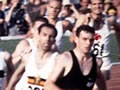
As an island nation, it is perhaps not surprising that New Zealand has done well in water events: 33 of our 54 golds have been won in or on the water; rowers have won 14, canoeists 10 and sailors nine. Peter Snell is perhaps our most famous Olympian, with three golds in the glamour middle-distance track events. But canoeists have been our most successful competitors. In a career spanning five Games between 1976 and 1992, Ian Ferguson won four gold medals and one silver. Lisa Carrington surpassed this feat by winning five golds and a bronze in three Games (2012 to 2021).
New Zealand’s early Olympians had to overcome high costs and long distances to participate at the Games. The 1920 team took nine weeks to get to Antwerp, and Violet Walrond’s father accompanied her as a chaperone. The 2012 team flew to London in about 24 hours. Modern Olympians are backed by a vast team of support staff, with doctors, physiotherapists, dieticians, chefs, managers and officials attempting to meet their every need. Interior designers help create a home away from home for the New Zealand athletes in the Olympic Village, including their own coffee machine. Every possible angle is covered to help the athletes go ‘Faster, Higher, Stronger’.


