Historic NZ events in September
Sep
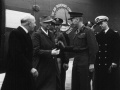
1943 Eleanor Roosevelt visits Auckland
It was near the end of the US First Lady’s surprise visit to New Zealand to meet American forces based in the country, inspect the work of the US Red Cross – whose grey uniform she wore throughout her seven-day stay – and study the contribution of New Zealand women to the war effort.
Read more...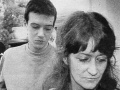
1987 New Zealander sentenced to death in Malaysia
Lorraine Cohen was sentenced to death by a Malaysian judge for heroin trafficking. On appeal her sentence was commuted to life imprisonment. The trial of Lorraine and her son Aaron, who was arrested at the same time, gained worldwide attention.
Read more...Sep
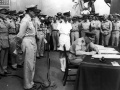
1945 Air Vice-Marshal Isitt accepts Japanese surrender
Air Vice-Marshal Leonard Isitt added New Zealand’s signature to the Instrument of Surrender between the Allied powers and Japan.
Read more...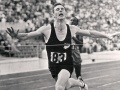
1960 Golden hour for Kiwi runners in Rome
New Zealand sport enjoyed one of its greatest days in Rome’s Olympic Stadium. Peter Snell won the 800 m and Murray Halberg won the 5000 m.
Read more...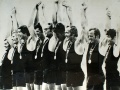
1972 New Zealand’s rowing eight wins gold
In 2008 the well-known sports writer Joseph Romanos chose the victory of the 1972 rowing eight as the best team performance by New Zealanders at an Olympic Games.
Read more...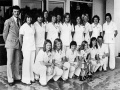
1975 First New Zealand representative women’s football team wins Asian Cup
In their first outing on the international stage, the New Zealand women’s football team won the invitational Asian Cup tournament in Hong Kong, beating Thailand 3–1 in the final.
Read more...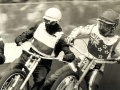
1979 Ivan Mauger wins sixth world speedway title
As well as a record six individual world titles between 1968 and 1979, including three in a row from 1968 to 1970, Mauger also won the long track world championship three times between 1971 and 1976.
Read more...Sep
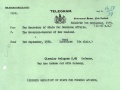
1939 New Zealand declares war on Germany
Alongside Britain and Australia, New Zealand was one of the first countries to become involved in the global conflict precipitated by Germany's invasion of Poland on 1 September 1939.
Read more...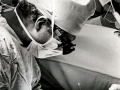
1958 First open-heart surgery in New Zealand
Pioneering heart surgeon Brian Barratt-Boyes performed the surgery using a heart-lung bypass machine. The procedure, at Green Lane Hospital in Auckland, was carried out on an 11-year-old girl with a hole in her heart.
Read more...Sep
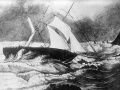
1863 The wreck of the Delaware
Soon after leaving Nelson for Napier, the Delaware was wrecked in what is now known as Delaware Bay. Accounts of the incident often focus on the heroism of Hūria Mātenga, one of five local Māori who helped the crew get ashore.
Read more...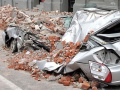
2010 7.1 earthquake rocks Canterbury
The earthquake which struck at 4.35 a.m. on a Saturday morning was felt by many people in the South Island and southern North Island. There was considerable damage in central Canterbury, especially in Christchurch, but no loss of life.
Read more...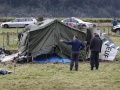
2010 Fox Glacier plane crash
On 4 September 2010 a plane crashed soon after taking off from Fox Glacier airstrip, killing all nine people on board. The Walter Fletcher FU-24 was piloted by 33-year-old Chaminda Senadhira and carried four skydiving instructors and four skydivers who were touring the West Coast on a Kiwi Experience bus trip.
Read more...Sep
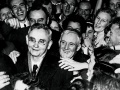
1939 Prime minister declares New Zealand’s support for Britain
When New Zealand declared war on Germany on 3 September 1939, Prime Minister Michael Joseph Savage was recovering from an operation for colon cancer. Acting Prime Minister Peter Fraser issued a statement in his place.
Read more...
1990 An Angel at My Table screens at Venice Film Festival
Based on the autobiographies of Janet Frame, An angel at my table was screened in 35 countries and won multiple awards, including a Grand Special Jury prize in Venice.
Read more...Sep
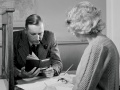
1948 New Zealand citizenship established
The British Nationality and New Zealand Citizenship Act 1948 (the order of the terms showed their relative importance) gave New Zealand citizenship to all current residents who had been either born British subjects or later naturalised.
Read more...Sep
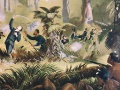
1868 Von Tempsky killed at Te Ngutu-o-te-manu
Gustavus von Tempsky was killed during an assault on Tītokowaru's south Taranaki pā. His exploits during the New Zealand Wars had made the Prussian soldier of fortune a folk hero for many European settlers.
Read more...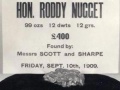
1909 New Zealand's heaviest gold nugget discovered
New Zealand’s heaviest gold nugget on record was found at Ross on the West Coast. Weighing 3.09 kg, the nugget was named the 'Honourable Roddy' after the minister of mines, Roderick McKenzie.
Read more...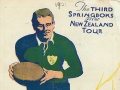
1921 Springboks play New Zealand Māori for first time
A South African journalist was outraged when white spectators supported the New Zealand Māori rugby team playing the touring Springboks at Napier.
Read more...Sep
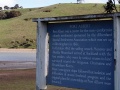
1862 First Albertland settlers arrive in Auckland
The Matilda Wattenbach brought 352 Nonconformist (non-Anglican Protestant) immigrants from England. Another 315 landed from the Hanover a week later, and six more immigrant ships had arrived by 1865.
Read more...
1906 New Zealand's first fatal car accident
Janet Meikle became the first person in New Zealand to be killed in an accident caused directly by a car when her 8-hp De Dion Bouton went over a bank on the family farm.
Read more...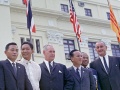
1954 New Zealand signs Manila Pact
The South-East Asia Collective Defence Treaty, or Manila Pact, aimed to contain the spread of communism in the region. The South-East Asia Treaty Organization (SEATO) was the institutional expression of this treaty.
Read more...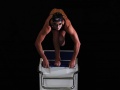
2008 Sophie Pascoe wins her first medal
At the 2008 Beijing Paralympics, 15-year-old Sophie Pascoe won her first medal, a silver in the women's 100m butterfly S10. She went on to win gold medals in 100m backstroke S10, 100m breaststroke SB9 and 200m individual medley SM10.
Read more...Sep
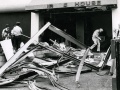
1976 Wanganui Computer legislation enacted
The establishment of New Zealand’s first centralised electronic database through the Wanganui Computer Centre Act focused attention on the state’s ability to gather information about its citizens.
Read more...Sep
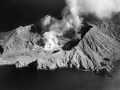
1914 Eruption on Whakaari (White Island) kills 10 people
On 10 September 1914, 10 miners working on Whakaari (White Island) were killed when part of the crater wall collapsed, causing a landslide
Read more...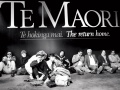
1984 Te Maori exhibition opens in New York
The landmark Te Maori exhibition was a milestone in the Māori cultural renaissance. Featuring traditional Māori artwork, it toured the United States between 1984 and 1986 before returning to New Zealand for a nationwide tour in 1987.
Read more...Sep
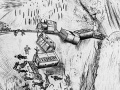
1880 Rail tragedy on the Remutaka incline
Four children were killed and 13 adults injured when two rail carriages were blown off the tracks by severe winds on a notoriously exposed part of the Remutaka incline railway. This was the first major loss of life on New Zealand’s railways.
Read more...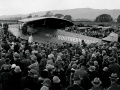
1928 First trans-Tasman flight touches down
Australian pilots Charles Kingsford Smith and Charles Ulm crossed the Tasman in a Fokker tri-motor named the Southern Cross, covering 2670 km in 14 hours 25 minutes.
Read more...Sep
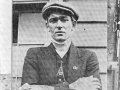
1914 Forty-three miners killed in explosion at Huntly
At 7.20 a.m. an explosion at Ralph's mine on Raynor Rd rocked Huntly. It was caused by a miner's naked acetylene cap-lamp igniting firedamp (methane gas given off by coal)
Read more...
1981 'Flour-bomb test' ends Springbok tour
The third and deciding rugby test at Eden Park, Auckland, is best remembered for the flares and flour bombs dropped onto the playing field. Outside the ground, violence erupted on an unprecedented scale.
Read more...Sep
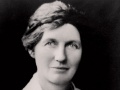
1933 New Zealand's first woman MP elected
The Labour Party’s Elizabeth McCombs became New Zealand’s first female Member of Parliament, winning a by-election in the Lyttelton seat caused by the death of her husband, James McCombs.
Read more...Sep

1938 Social Security Act passed
The cornerstone of the first Labour government’s welfare programme, the Social Security Act overhauled the pension system and extended benefits for families, invalids and the unemployed.
Read more...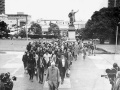
1972 Te taenga mai o te petihana reo Māori – Arrival of the Māori language petition
On 14 September 1972, a petition was delivered to Parliament which challenged politicians to prioritise saving te reo Māori.
Read more...Sep
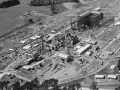
1969 First steel produced from local ironsand
New Zealand Steel’s Glenbrook mill, near Waiuku, south of Auckland, produced iron and steel from local ironsand (titanomagnetite) for the first time. In 2020 ironsand and coal were being used to produce about 650,000 tonnes of steel a year.
Read more...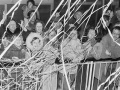
1976 Lyttelton–Wellington ferry service ends
The last sailing of the Rangatira brought to an end more than 80 years of regular passenger ferry services between Lyttelton and Wellington.
Read more...Sep
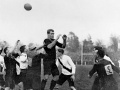
1905 'Originals' kick off All Black tradition
The first fully representative New Zealand rugby team to tour the northern hemisphere was known as the ‘Originals’. They won 34 of their 35 matches and popularised both the haka and the ‘All Blacks’ nickname.
Read more...Sep
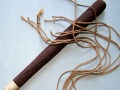
1941 Flogging and whipping abolished
As well as (temporarily) doing away with capital punishment for murder, the Crimes Amendment Act 1941 abolished judicial provision for flogging and whipping.
Read more...Sep
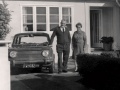
1937 First state house opened in Miramar
Most of the Labour Cabinet helped the first tenants move into 12 Fife Lane in Miramar, Wellington. Even Prime Minister Michael Joseph Savage carried a cumbersome dining table through a cheering throng.
Read more...Sep
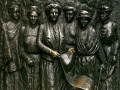
1893 Women win the right to vote
When the governor, Lord Glasgow, signed a new Electoral Act into law, New Zealand became the first self-governing country in the world in which women had the right to vote in parliamentary elections.
Read more...Sep
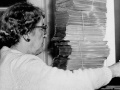
1954 Mazengarb report released
The Mazengarb inquiry into ‘juvenile delinquency’ blamed the perceived promiscuity of the nation’s youth on working mothers, the ready availability of contraceptives, and young women enticing men to have sex.
Read more...
1999 First New Zealand troops arrive in East Timor
New Zealand troops arrived at Komoro airfield in Dili, the capital of Timor-Leste (East Timor), as part of the Interfet mission to stabilise the province. Read more...
Sep
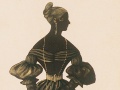
1834 Rescue of Harriet survivors begins
The family of the whaler Jacky Guard were among a group of Pākehā captured by Māori in May 1834 after the barque Harriet ran aground on the Taranaki coast.
Read more...Sep
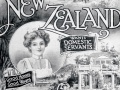
1906 Domestic workers call for 68-hour week
At a meeting in Wellington, Marianne Tasker and supporters established a domestic workers’ union, hoping to use the Liberal government’s Industrial Conciliation and Arbitration Act to force employers to improve pay and conditions. Central to their demands was a 68-hour working week.
Read more...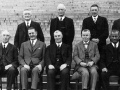
1931 Coalition government formed to combat Depression
United Party Prime Minister George Forbes had convened an inter-party conference with the goal of forming a coalition government that would ‘share the responsibility’ of dealing with the Depression.
Read more...Sep
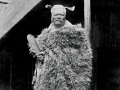
1887 Tongariro mountains protected
In February 1887 newspapers reported Ngāti Tūwharetoa’s proposal to ‘gift’ the British Crown the mountaintops of Tongariro, Ngāuruhoe and Ruapehu to form the basis of a national park.
Read more...Sep

1905 Racist killing in Wellington's Haining St
The murder of retired miner Joe Kum Yung by white supremacist Lionel Terry in Wellington’s Haining Street highlighted the hatred some felt towards New Zealand’s small but long-established Chinese community.
Read more...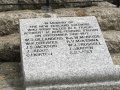
1917 Bere Ferrers rail accident
Ten New Zealand soldiers were killed when they were hit by a train at Bere Ferrers in southern England. The accident occurred as troops from the 28th Reinforcements for the NZ Expeditionary Force were being transported from Plymouth to Sling Camp on Salisbury Plain.
Read more...Sep

1819 New Zealand's first grapevines planted?
Missionary Samuel Marsden planted a vineyard on the site of a new Church Missionary Society station at Kerikeri.
Read more...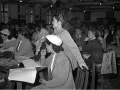
1951 Māori Women's Welfare League established
Eighty-seven delegates attended the first day of the inaugural conference of the Māori Women’s Welfare League in Wellington. Dame Whina Cooper was appointed as president.
Read more...Sep
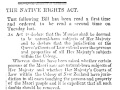
1865 Native Rights Act declares Māori British subjects
The Act deemed all Māori to be natural-born subjects of the Crown, confirming in law the treaty promise that Māori were to be accorded the same status as other British subjects.
Read more...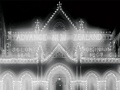
1907 Joseph Ward proclaims dominion status
Prime Minister Ward read the proclamation to a smallish crowd from the steps of the General Assembly Library in Wellington. This first Dominion Day was a public holiday.
Read more...Sep
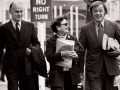
1974 William Sutch charged with spying
On a rainy night in Wellington’s Aro St, the Security Intelligence Service (SIS) gatecrashed a meeting between William Sutch and Dimitri Razgovorov. They believed Sutch, a prominent economist and former senior public servant, was passing information to Razgovorov, a Soviet diplomat.
Read more...
2013 Lorde releases Pure heroine in New Zealand and Australia
Following the success of her single ‘Royals’, Lorde’s first studio album Pure heroine debuted at number three on the US Billboard 200 charts
Read more...Sep
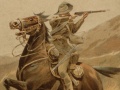
1899 New Zealand answers the empire's call to arms
Premier Richard ‘King Dick’ Seddon asked Parliament to approve an offer to the British government of a contingent of mounted riflemen to serve in South Africa. Amid emotional scenes, the members overwhelmingly endorsed the motion – only five voted against it.
Read more...Sep
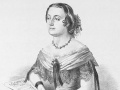
1862 New Zealand's first professional opera performance
Dunedin's Royal Princess Theatre was the venue for a performance of Donizetti's Daughter of the regiment by the visiting English Opera Troupe, supplemented by local performers.
Read more...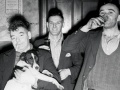
1947 Greymouth beer boycott provoked
West Coast publicans soon regretted increasing the price of a beer by 1d.
Read more...Sep
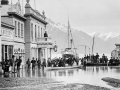
1878 Great Flood hits South Island
The ‘Great Flood’ of 1878 killed at least three people and thousands of animals as it swept across the southern South Island
Read more...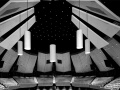
1972 New Christchurch Town Hall opens
Designed by prominent Christchurch architects Warren and Mahoney, the Brutalist (blocky, using lots of concrete) structure was officially opened by Governor-General Sir Denis Blundell.
Read more...